
How the Combined ER and Urgent Care Model Improves Triage, Overall Patient Experience
Fix the front door, and patient loyalty follows. Here's how the combined ER and urgent care model gives health systems an edge over freestanding ERs.

Written by: Jay Woody, M.D., FACEP
Published on: October 5, 2026
For most patients, the healthcare system is broken. Long wait times, and a fundamental mismatch between where they go and the care they need.
I’ve seen this in ERs across the country. A patient with the flu drives to their hospital-based ER because it's the only place open at 11 p.m. They sit in a waiting room for hours for the same care, a walk-in or urgent care clinic would have provided in less time and less costly.
Another patient with a sprained ankle goes to their local urgent care, but the provider needs X-rays and doesn't have the technology on-site. The patient gets sent to an imaging center across town, waits another hour, then receives two separate bills weeks apart.
Patients don't choose inefficiency. The system forces it on them, and patient experience scores tell the story.
Press Ganey and other satisfaction metrics show unprecedented drops in ED satisfaction. Patients don't know where to go. They wait in the wrong place. They get billed in ways that don't match the care they received.
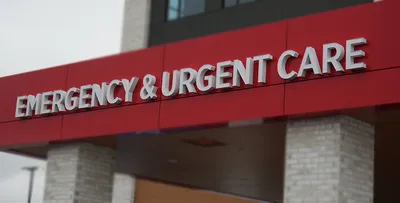
This is why I pioneered the combined ER and urgent care model back in 2008. Now led by Intuitive Health, the innovative model integrates both levels of care at a single site. With doctor-led teams and on-site imaging and lab services available 24/7, we remove the guesswork on where to receive care that erodes patient trust and turn each visit into a durable relationship. The result is shorter waits, fewer referrals, and return rates more than 2× higher than traditional settings.
Here is how it works, and why it matters for regional health systems competing against free-standing ERs.
Why does the traditional healthcare model frustrate patients?
The problem is not patient behavior. It is system design. Patients cannot always know whether a symptom needs an emergency room or urgent care, so they guess based on which building is closest or where they are certain they will have the doctors and technology to care for them.
That guesswork carries real costs:
- Delayed care when urgent care patients are referred mid-treatment to the ER.
- Duplicate bills when a single episode touches two disconnected sites.
- Long waits as emergency departments fill with non-urgent visits.
The Urgent Care Association's benchmarking shows 5% of patients are referred or redirected to the ED, incurring duplicate bills and frustrating both provider and patient. Bain & Company consumer research confirms that patients are genuinely confused about the appropriate care setting for common complaints.
How does the combined model fix the patient experience?
The combined model evaluates every patient at the point of entry. The physician determines the appropriate evaluation, and the patient is only billed for the level of care received. The billing level is based on objective criteria and is resource driven. Three features drive the experience improvement:
- Integrated triage eliminates guesswork, duplicate visits, and unnecessary costs.
- 24/7 access with no appointments required delivers rapid service and best-practice wait times.
- Acuity-based billing means patients pay for the care they receive.
More than 70% of patients at Intuitive Health sites are appropriately billed as urgent care. Because patients are seen in the right setting the first time, it shortens door-to-discharge times and removes the billing confusion that damages trust.
What measurable results does the model deliver?
Better triage produces measurable loyalty. Combined ER and urgent care sites deliver patient return rates more than 2X higher than traditional freestanding EDs and urgent care centers, driven by fast door-to-discharge times and the confidence of only receiving a bill for the level of care provided.
The satisfaction data is consistent:
- Net Promoter Scores at our hybrid centers exceed 75, outpacing traditional settings.
- Google star ratings exceed 4.5 out of 5, higher than nearby urgent care centers and hospital-based EDs.
- Revisit rates reach 46% at combined ER and urgent care sites, compared with 22% at other urgent care centers.
For regional health systems, that loyalty compounds. Patients who have a positive experience stay in-network, feeding a referral pipeline that supports inpatient, surgical, and specialty service lines converting a fragmented encounter into a lasting patient relationship.
Why patient experience is a competitive advantage.
For health systems competing against free-standing ERs, patient experience is a differentiation strategy. The combined model improves brand perception, strengthens in-network retention, and turns each satisfied visit into future revenue. Fix the front door, and the rest of the system works the way it was designed to.
Intuitive Health works with hospitals and health systems nationwide to develop and operate combined ER and urgent care facilities that expand access, improve efficiency, and deliver high-quality care.
Schedule a conversation at IHERUC.com/Connect to evaluate how the model could improve patient outcomes and strengthen your network's referral performance.